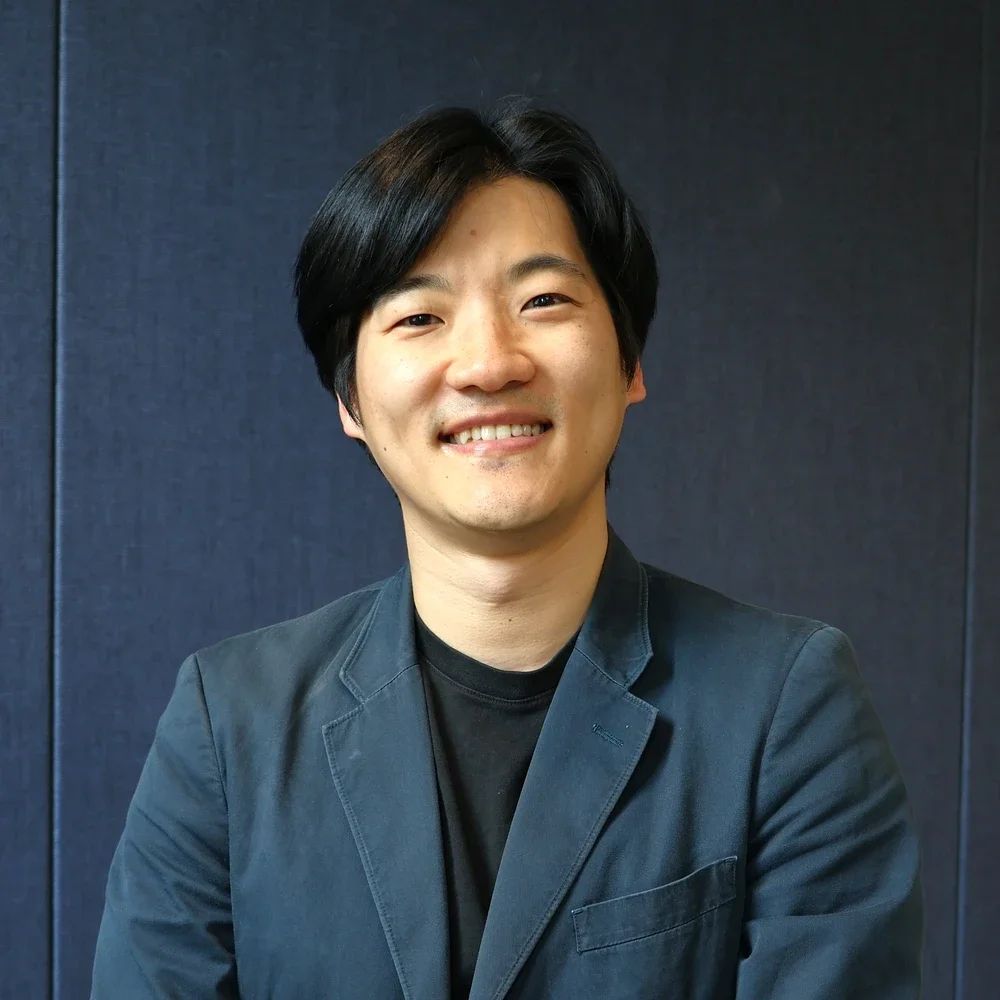
When Jubyeong Chae decided to pursue a Ph.D. in chemistry, he said he wanted to do more research and take on new challenges with great faculty members and colleagues.
Working under the advisement of Prof. Liviu Mirica, Chae has explored new challenges as a graduate student in his research group. Chae’s research has focused on nickel-catalyzed alkyl–alkyl cross-coupling reactions using 1,4,7-triisopropyltriazacyclononane (iPr3TACN) as a supporting ligand, which very effective at stabilizing both low-valent and high-valent nickel species. That uncommon trait, Chae said, allowed them to detect or isolate key intermediates in the catalytic cycle.
“We then explored the catalytic reactivity of these complexes and discovered several interesting transformations over the past few years,” Chae said.
One of the most significant findings of Chae’s work is that this nickel complex can activate alkyl and aryl chlorides, which are typically difficult to activate because of the strong C–Cl bond dissociation energy.
“This is important because alkyl and aryl chlorides are generally more abundant, less expensive, and more stable than the corresponding bromides and iodides. As a result, our work enables C–C bond formation from more readily available starting materials,” Chae said.
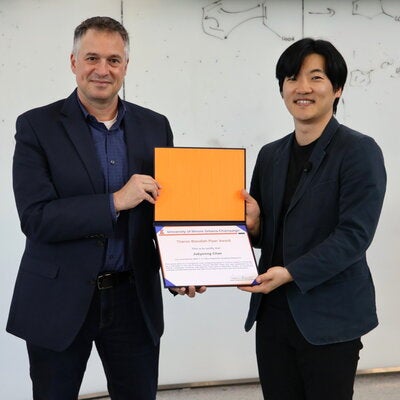
For this work, Chae was selected as the recipient of the 2026 Theron Standish Piper Award for Outstanding Inorganic Ph.D. in the Department of Chemistry. As the T.S. Piper Award recipient, Chae gave a special presentation of his thesis in May.
A major highlight of his research so far, Chae said, has been the opportunity to crystallize many nickel complexes with different ligand frameworks during his catalytic studies.
“I found this especially exciting because crystal structures allow us to directly observe molecular structures rather than infer them only from spectroscopic data,” he said.
Chae, who plans to find a postdoctoral position next and hopes to follow that with a faculty position, has had various opportunities to present his research, including ACS meetings, Organometallics Gordon Research Conference, the Chicago Regional Inorganic Colloquium, and the Organic Allerton Conference. In August, Chae will present at the ACS meeting in Chicago and talk about the most recent study.
Chae first became interested in chemistry during middle school, when he found the colorful changes in chemical reactions very fascinating, but it was several years later when he decided to pursue a PhD in chemistry.
Initially, he planned to find a job after completing his master’s degree at Seoul National University of Science and Technology. But after spending a year as a visiting scholar at the University of Minnesota, he became much more interested in pursuing a Ph.D. in chemistry.
He credits his master’s program advisor, Prof. Cheal Kim, with encouraging him to study abroad and recommended Illinois Chemistry as one of the top schools he should apply to attend.
“I had also heard that many outstanding chemists in South Korea had studied at UIUC, so I really wanted to become part of that tradition,” Chae said.