The Department of Chemistry congratulates the 2026 recipients of the Distinguished Alumni Award and the Young Alumni Achievement Award, which recognize and celebrate their outstanding achievements in the chemical sciences.
2026 Distinguished Alumni Award recipients
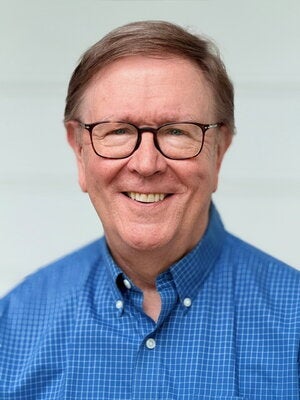
David R. Corbin (Ph.D., '80)
Dr. David R. Corbin is a distinguished research scientist whose career has spanned more than four decades of innovation in chemistry, materials science, and chemical engineering. After receiving his B.S. in chemistry from SUNY Fredonia in 1976, he enrolled at University of Illinois at Urbana-Champaign and in 1980 completed his Ph.D. in inorganic chemistry under the tutelage of Professor Galen Stucky. Currently, he serves as an Adjunct Senior Research Scientist in the Wonderful Institute for Sustainable Engineering and the Department of Chemical and Petroleum Engineering at the University of Kansas, following a remarkable 35-year career at DuPont Central Research & Development, where he rose from Staff Scientist to Senior Research Fellow.
Throughout his career, Dr. Corbin has made significant contributions in the fields of zeolite and molecular sieve chemistry, catalysis, separations, advanced materials, and sustainable chemical processes. His work has helped advance technologies ranging from catalysts and gas separations to battery recycling, renewable fuels, membrane materials, and environmental remediation. He is the author or co-author of more than 160 scientific publications, several highly cited review articles, and numerous landmark papers in the Journal of the American Chemical Society and other leading journals. His research has been cited thousands of times by scientists around the world, reflecting its lasting impact on both fundamental science and industrial innovation.
An accomplished inventor as well as a scientist, Dr. Corbin has been named on more than 70 U.S. patents, translating fundamental discoveries into technologies with real-world applications across the chemical industry. Colleagues know him not only for his scientific creativity and technical leadership, but also for his commitment to mentoring researchers and fostering interdisciplinary collaboration.
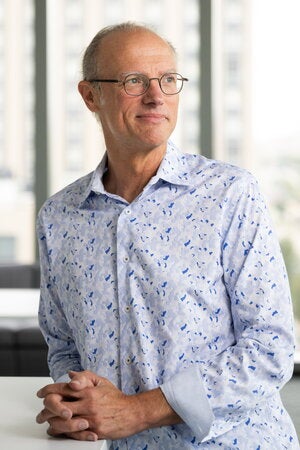
Mark W. Grinstaff (Ph.D., '92)
Mark W. Grinstaff is the William Fairfield Warren Distinguished Professor, and a Professor of Biomedical Engineering, Chemistry, Materials Science and Engineering, and Medicine at Boston University. He is also the Director of BU’s Nanotechnology Innovation Center and the Director of the NIH T32 Biomaterials Program.
Grinstaff earned his Ph.D. under the mentorship of Professor Kenneth S. Suslick, Marvin T. Schmidt Research Professor of Chemistry at Illinois. Grinstaff's awards include the ACS Nobel Laureate Signature Award, NSF Career Award, Pew Scholar in the Biomedical Sciences, Camille Dreyfus Teacher-Scholar, Alfred P. Sloan Research Fellowship, the Edward M. Kennedy Award for Health Care Innovation, the Clemson Award for Applied Research, the ACS Award in Applied Polymer Science, the RSC Centenary Prize, and the National Science Foundation Trailblazer Engineering Impact Award.
He is a Fellow of the American Institute of Medical and Biological Engineering, the American Academy of Nanomedicine, the American Institute of Chemists, the Biomedical Engineering Society, the Royal Chemical Society, the Royal Society of Medicine, the International Academy of Medical and Biological Engineering, the American Association for the Advancement of Science, the Controlled Release Society, and a Founding Fellow of the National Academy of Inventors. Over the course of his tenure, Grinstaff’s groundbreaking research has yielded more than 450 peer-reviewed publications, more than 250 patents and patent applications, and more than 400 oral presentations. His work has been cited more than 57,000 times (h-index = 105). He is a co-founder of several companies, and his innovative ideas and efforts have led to new regulatory products including a pharmaceutical product (AbraxaneTM), adhesive products (OcuSeal® and Adherus Surgical Sealants®), and biopsy markers (Trilogy™ Breast Tissue Markers) that are now the standard of care and helping millions of patients.
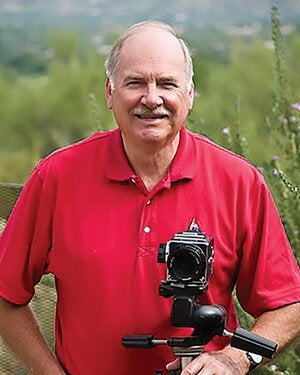
John P. Schaefer (Ph.D., '58)
Dr. John P. Schaefer is president emeritus of the University of Arizona, where he had a distinguished twenty-one-year career in teaching and research followed by 23 years as president of the Research Corporation for Science Advancement. Born on Sept. 17, 1934, in New York City, he received a bachelor’s degree from the Polytechnic Institute of Brooklyn in 1955, and a doctorate from the University of Illinois in 1958. Following his postdoctoral studies, he taught chemistry at the University of California, Berkeley, before coming to the University of Arizona as a chemistry professor in 1960. He served as head of the chemistry department and as dean of the College of Liberal Arts before becoming the university’s 15th president at 36 years of age.
Schaefer is credited with putting the University of Arizona on the path that transformed the institution into an academic research powerhouse, making major advances in quality of faculty and facilities during his tenure. He approved the University’s participation in the Multiple Mirror Telescope, a project that revolutionized thinking about optical telescope design. During his presidency, the university broke ground on and dedicated the new Main Library. An avid and highly skilled photographer, Schaefer developed a friendship with photographer Ansel Adams that led to the creation of the Center for Creative Photography in 1975. The center was created after Schaefer asked Adams to entrust the University with his archives. Adams agreed under the condition that Schaefer create a repository for a collection of photographic artists. Today, the Center is recognized as one of the world’s finest academic art museums and study centers for the history of photography. Beginning with the archives of five living master photographers—Ansel Adams, Wynn Bullock, Harry Callahan, Aaron Siskind, and Frederick Sommer—the collection has grown to include 270 archival collections.
In 1982, Schaefer left the University to serve as President of Research Corporation Technologies where he oversaw the separation of its technology transfer component into a separate entity from its foundation, which became the Research Corporation for Science Advancement. Schaefer led RCSA as its president and CEO until 2005. And he served as chairman of the separate Research Corporation Technologies until 2023. At RCSA, he oversaw major initiatives, including creation of the Partners in Science Program, funding of the Large Binocular Telescope project on Mount Graham, and the initiation of the Cottrell Scholar Awards.
Dr. Schaefer has been recognized with major honors for his achievements. These include the named National Academy of Sciences John P. Schaefer Award for Scientific Discovery (2014) and the named John P. Schaefer Graduate Student Award in Optical Sciences (2024), as well as community and institutional awards such as the Generations of Commitment Award (2011) and the Tucson Chamber of Commerce Founders’ Award (2009).
He is also a conservationist and avid birdwatcher, who helped organize the Tucson Audubon Society and found the Nature Conservancy in Arizona. He has published five books on photography, an organic chemistry textbook, over 40 technical papers in organic chemistry, and many articles on photography.
2026 Young Alumni Achievement Award recipients
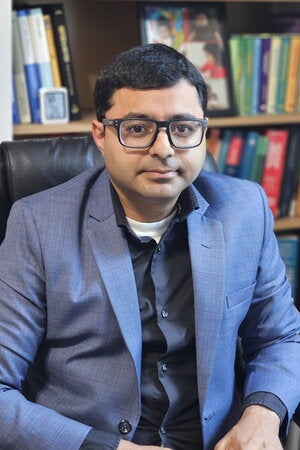
Subha Mukherjee (Ph.D., '15)
Dr. Subha Mukherjee earned his Ph.D. in Chemistry from the University of Illinois Urbana-Champaign in 2015, working under Professor Wilfred A. van der Donk, Richard E. Heckert Endowed Chair in Chemistry, and Howard Hughes Medical Institute Investigator, on peptide synthesis, bio-orthogonal chemistry, and chemical and enzymatic methods to study lanthipeptide and phosphonate natural products. This work laid the foundation for a career defined by chemical creativity and technical rigor.
That same year, Mukherjee joined the process chemistry department at Bristol Myers Squibb in New Jersey, where he grew from a scientist enabling scalable process development into a leader guiding chemistry teams across the peptide, small-molecule, and antibody-drug conjugate portfolios, establishing himself as a modality-agnostic process chemist. In 2023, he joined Eli Lilly and Company in Indiana, where he now serves as Scientific Director, leading innovation in the TIDES space and late-stage process development. Beyond his day job, he has helped drive progress industry-wide as co-lead of the IQ Synthetic Peptide Consortium and, for the past decade, as a member of the ACS Green Chemistry Pharma Roundtable's peptide team, advancing and publishing on sustainable approaches to pharmaceutical manufacturing. Outside the lab, Subha is an avid reader and writer, a devoted fountain pen enthusiast, and a lover of long road trips with his family.
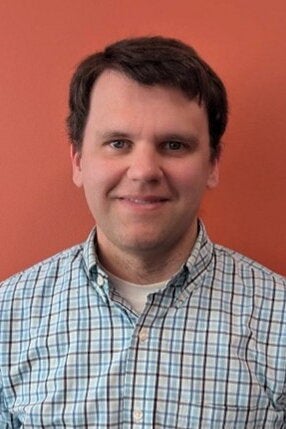
Daniel Robbins (Ph.D., '12)
Dr. Daniel Robbins was born in Milwaukee, Wisc., and spent his childhood in Wisconsin, Pennsylvania and Indiana. After completing his undergraduate education in chemical engineering at Purdue University, Robbins received his Ph.D. in chemistry from the University of Illinois Urbana-Champaign in 2012 under the direction of Prof. John Hartwig.
After post-doctoral studies at Boston College, Robbins began his industrial career at AstraZeneca in Waltham, MA in 2013, where he worked on several oncology programs, including the team which discovered the MCL1 inhibitor AZD5991, which progressed to a Phase 1 clinical trial for the treatment of myeloid malignancies. In 2016, Robbins moved to the medicinal chemistry group at Nurix Therapeutics in San Francisco. During his six years at Nurix, Robbins contributed to the discovery of NX-1607, a first-in-class Cbl-b inhibitor which is currently being investigated in a Phase 1 clinical trial for a variety of immuno-oncology applications. Robbins also led the Nurix BTK degrader program from inception through the progression of 2 molecules, NX-2127 (now zelebrudomide) and NX-5948 (now bexobrutideg), into clinical development. Both compounds are currently being studied in multiple clinical trials, and NX-5948 began a pivotal study in 2025 to treat patients with relapsed/refractory chronic lymphocytic leukemia. In 2022, Robbins joined the GDC group in Emeryville, CA, where he has served as a project leader for multiple programs targeting Chagas disease and latent, liver-stage malaria.