Contact Information
CLSL A129B
600 S. Mathews Avenue
MC-712
Urbana, IL 61801
Research Areas
Biography
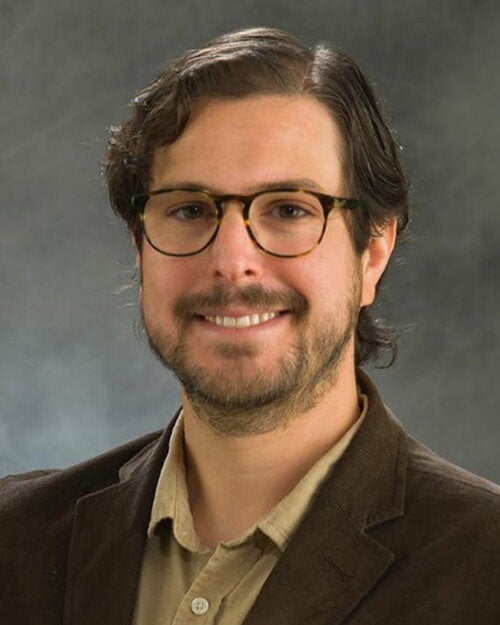
Professor Backlund received his B.S. from the University of California, Berkeley in 2010, then earned his Ph.D. from Stanford University in 2016 working in the lab of W. E. Moerner. From 2016 to 2020 he was a postdoctoral fellow working with Ron Walsworth at the Harvard-Smithsonian Center for Astrophysics before starting his independent career at the University of Illinois Urbana-Champaign in 2020. His lab’s research centers on the quantum metrological aspects of chemical microscopy.
Research Interests
Quantum sensing, quantum metrology, optical microscopy, magnetic resonance, single-molecule and super-resolution microscopy, biophysics, condensed matter
Research Description
In the Backlund lab we view molecular microscopy as an exercise in quantum metrology. In doing so, we develop and apply advanced nanoscale and single-molecule microscopy techniques capable of resolving latent heterogeneity in systems relevant to chemistry, materials, and biology.
Projects include:
Quantum information limits of optical microscopy
Photons are precious in optical nanoscopy. Here it pays to think critically about how the information recovered from an experiment compares to the fundamental limits set by 1) what’s encoded in the quantum state and 2) the decoding rules dictated by quantum measurement theory. Recent research highlights include the experimental realization of quantum-inspired super-resolution imaging in the context of high-NA fluorescence microscopy.
Nanoscale magnetic resonance microscopy using spin qubits
NMR and EPR are workhorse techniques in (bio)chemical analysis, but are conventionally limited to probing large ensembles of molecules due to their inherent insensitivity. Nitrogen-vacancy (NV) centers are quantum defects in diamond that can be wielded as tiny magnetometers. We use NVs and other molecular spin qubits to effectively bring magnetic resonance to the nanoscale. Recent research highlights include interfacing single, shallow NVs with photoswitchable organic reporter spins derived from repurposed fluorescent dyes.
Awards and Honors
RCSA Scialog Fellow in Quantum Matter and Information, 2025
National Science Foundation CAREER Award, 2025
National Academy of Sciences Kavli Fellow, 2024
Beckman Young Investigator Award, 2023
Spectroscopy Society of Pittsburgh Starter Grant Award, 2022
Additional Campus Affiliations
Highlighted Publications
M. P. Backlund, Quantum limits to chiroptical molecular discrimination, arXiv:2607.19136.
M. P. Backlund, Spontaneous optical emission of a randomly oriented chiral quantum source, arXiv:2607.18617.
L. P. Ajayakumar, D. J. Durden, A. N. Regeni, M. Xie, S. Hegde, G. Aldas, K. Haggard, and M. P. Backlund, Photoswitchable radicals as reporter spins for quantum sensing with spin defects in diamond, J. Am. Chem. Soc., 148, 26890-26899 (2026).
C. S. Mitchell, D. Dhruva, Z. P. Burke, D. J. Durden, A. I. Dingilian, and M. P. Backlund, Quantum-inspired super-resolution of fluorescent point-like sources, Nature Commun., 17, 6112 (2026).
A. I. Dingilian, A. Kurella, D. Chamria, C. S. Mitchell, D. Dhruva, D. J. Durden, and M. P. Backlund, Quantifying classical and quantum bounds for resolving closely spaced, non-interacting, simultaneously emitting dipole sources in optical microscopy, J. Chem. Phys., 164, 094201 (2026).
A. K. Das*, S. Hegde*, T. J. Woods, V. S. Wani, and M. P. Backlund (*equal contributions), Direct Observation of Three Chiral Conformers of an Atomically Precise Metal Nanoparticle, Nano Lett., 25, 7491-7498 (2025).
S. Hegde, D. J. Durden, L. P. Ajayakumar, R. Sivakumar, and M. P. Backlund, Quantum sensing in the fractional Fourier domain, Phys. Rev. Applied, 23, 024035 (2025).
C. S. Mitchell and M. P. Backlund, Tight information bounds for spontaneous emission lifetime resolution of quantum sources with varied spectral purity, Phys. Rev. A, 108, 023712 (2023).
C. S. Mitchell and M. P. Backlund, Quantum limits to resolution and discrimination of spontaneous emission lifetimes, Phys. Rev. A, 105, 062603 (2022).
For a complete list of publications see Google Scholar page.