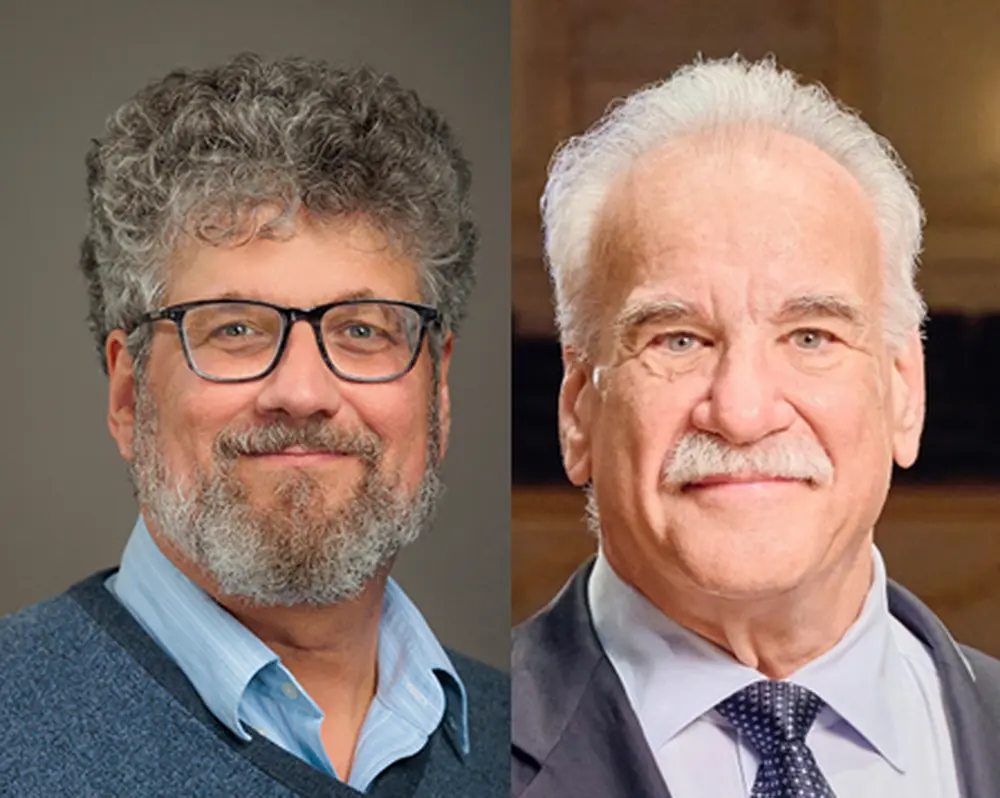
Two research proposals in the Department of Chemistry have been selected to receive Discovery Fund awards. This new round of funding will support a project exploring how peptide hormone processing in the gut changes during the development of metabolic disorders. And the funds will also support creation of an innovative workflow for the systematic discovery of new organic reactions and reaction mechanisms.
The Discovery Fund was established in 2018 to provide funding for innovative research in the Department of Chemistry and is generously supported by a gift from chemistry alumni Ving Lee (PhD, ‘75, Rinehart) and May Lee (PhD, ‘76, Rinehart). This marks the fifth consecutive year that the fund has supported chemistry research projects in the initial discovery phase. To offset the shrinking availability of federal and state funding for starter projects, the Chemistry Discovery Fund enables Illinois chemistry faculty to explore fresh ideas by applying for overhead-free grants for new projects.
Jonathan Sweedler, James R. Eiszner Family Endowed Chair in Chemistry, will use the grant funds to create a cutting edge, single-cell mass spectrometry (MS) workflow to explore enteroendocrine cell (EEC) heterogeneity and determine how peptide hormone processing in the gut changes during the development of metabolic disorders. Existing methods to explore prohormone processing in islets and EECs rely on large “bulk” samples that are not able to capture how an individual cell’s peptide repertoire changes during transition from healthy to diseased states. The Sweedler lab has created unique single-cell MS measurements to characterize neuropeptides in the brain but has never applied these to gut-derived peptides.
Scott Denmark, Reynold C. Fuson Professor of Chemistry, will use the grant funds to create an innovative blueprint for the discovery of new organic reactions and reaction mechanisms. The objective of the Denmark lab proposal is to refocus the challenge of discovering new reactions to a single target molecule — which is already known — and through combinatorial selection of starting materials and conditions — none of which are known — to combine in any way to form the target molecule, to discover if they come together successfully, even in the minutest amounts.