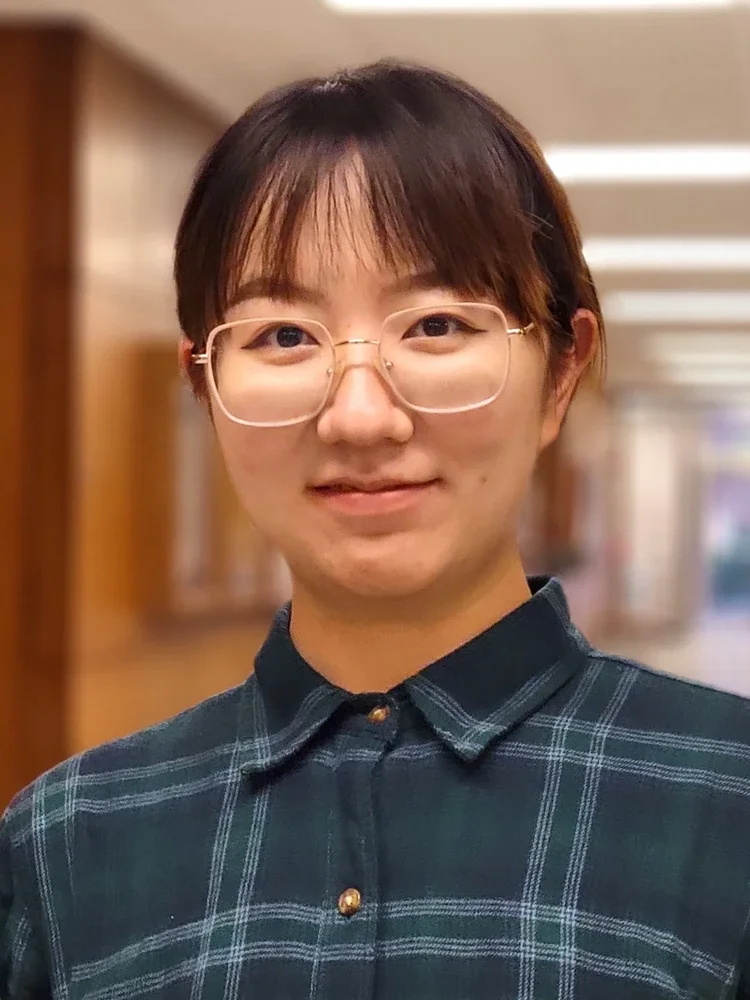
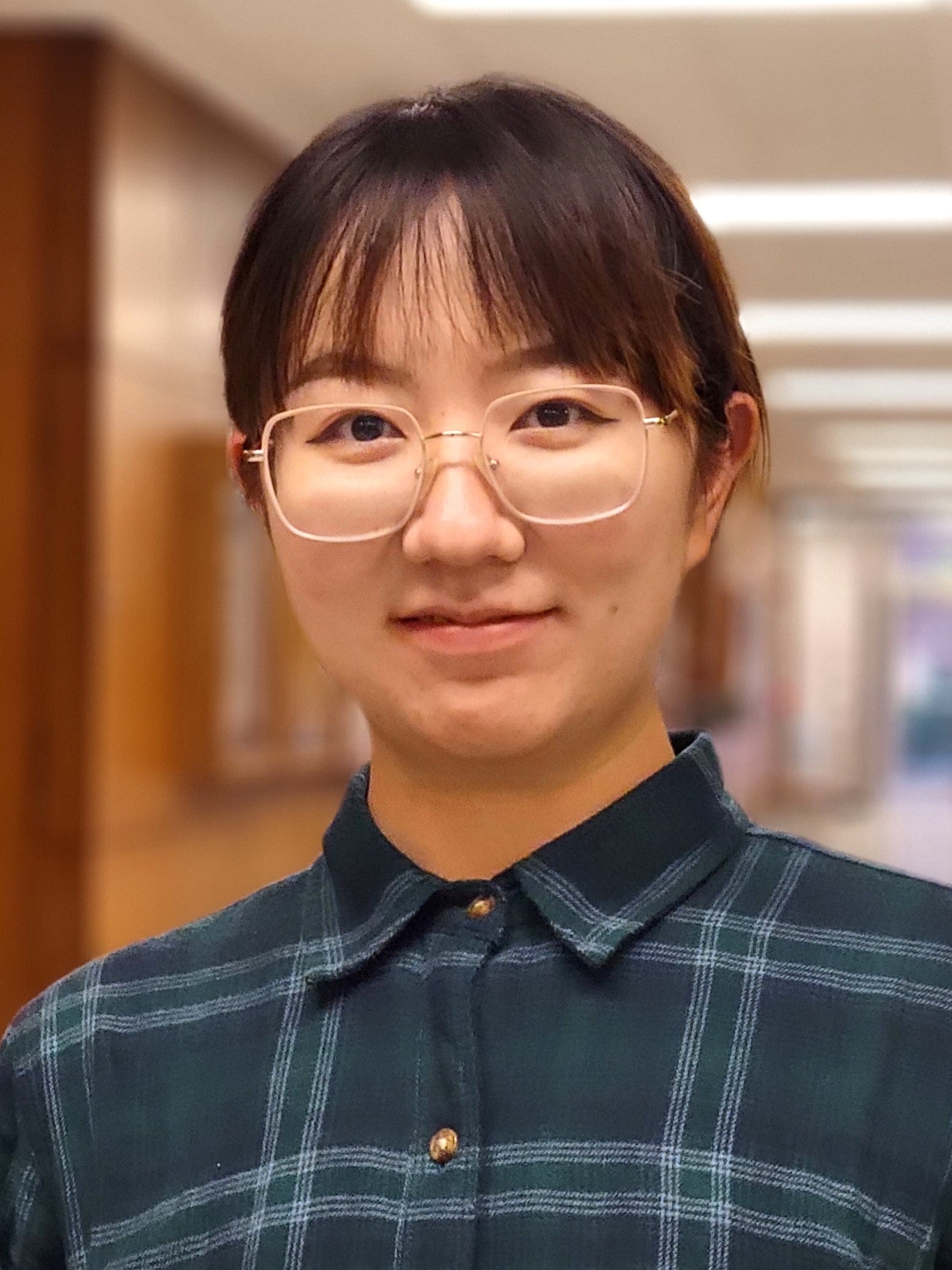
As a chemistry major at Nanjing University in China, Wenqing Zhu was mentored by a Ph.D. student who helped her develop technical research skills but also taught Zhu how to manage her time, how to consistently read scientific literature and how to network with others.
“I benefited so much from that, and it's a large part of why I want to do the same for others,” said Zhu, who is now a Ph.D. student in chemistry at Illinois and the recipient of the 2026 Dr. Sandra Murawski Award for Mentoring Excellence in the Department of Chemistry.
The Murawski award in the amount of $1,000 was established by Illinois Chemistry alumna Dr. Sandra Murawski (Ph.D., ’86) who built a 40-year career in chemistry at P&G and established the award to recognize and support excellence in graduate student mentoring.
Zhu said she is genuinely honored to receive the award, which means a great deal. She said the award serves as a strong encouragement to her and affirms her belief that mentoring others is meaningful and appreciated.
“Mentoring students, both undergraduates and graduate students, is something I truly enjoy, and it has never felt like a task separate from my research,” Zhu said. “I also know from my own experience how much a good mentor matters.”
As a chemistry graduate student in the lab of Illinois physics Prof. Ido Golding, Zhu has dedicated much of her time to mentoring others in addition to her research focusing on single-molecule imaging, specifically understanding bacteriophage infection dynamics in host cells, using both super-resolution fluorescence microscopy and computational modeling.
Since joining the Golding lab more than four years ago, Zhu has been involved in multiple activities and programs where she has mentored undergraduates and higher-level trainees, including graduate students and postdoctoral researchers, according to Prof. Golding, who nominated Zhu for the Murawski award.
Golding said that overall, Zhu has shown strong commitment to training and education of mentees in various ways and her selection for this award formally acknowledges her contributions and demonstrates that her mentoring efforts are noticed and appreciated.
- For the past three years, Zhu has taught small groups of trainees in an intensive one-week hands-on MINFLUX microscopy summer program on the Illinois campus at the National Science Foundation Science and Technology Center for Quantitative Cellular Biology. The QCB summer school is an opportunity for graduate students, postdoctoral fellows, and researchers in physics, biophysics, chemical and life sciences, and engineering to expand their research skills in quantitative methods for studying and modeling cells.
- Zhu guided about 10 undergraduates in an upper-level physics course through a super-resolution microscopy project, mentoring them in developing scientific presentation skills.
- Last fall, Zhu participated in the Merit Mentoring & Professional Network Program, where she served as a formal mentor to three undergraduate students, meeting weekly for one-on-one advising sessions.
- Zhu also serves as a co-organizer of lab tours, giving students direct exposure to active research environments.
Q&A with Wenqing Zhu
What do you enjoy about mentoring?
What I enjoy most is being part of a student's growth. For example, I worked with a sophomore undergraduate on microscopy experiments. They started with a lot of raw curiosity but not yet the technical skills. Over time, I got to help turn that curiosity into real competence, to the point where they could do some of the analysis work on their own. Being involved in that kind of growth, and the connection that comes with it, is what I find most meaningful about mentoring.
Why do you think mentoring is important?
I've always believed that you don't truly master something until you can explain and teach it to someone else clearly. In that sense, mentoring is an important part of growth as a scientist.
Has mentoring helped you?
Yes. First, mentoring has been a deeper test and exercise of my own expertise, because explaining and teaching something to others forces me to understand my field more thoroughly than I otherwise would. I also think mentoring itself is a skill that takes practice and learning. Knowing when to step in and when to hold back, how to correct someone without discouraging them, and how to keep them motivated may seem like small, specific things, but learning them is really part of a more general skill. It's about learning how to work well with others and how to become a good leader.
What are your future career plans?
My aspiration is to establish my own research lab one day. On one side, I hope to continue doing research. On the other, I want the lab to serve an educational purpose, helping more students discover their own goals and find a direction that genuinely fits them. I would like to be someone who can make a positive difference in students' lives, especially in that formative period before they begin their careers, when good guidance matters most.