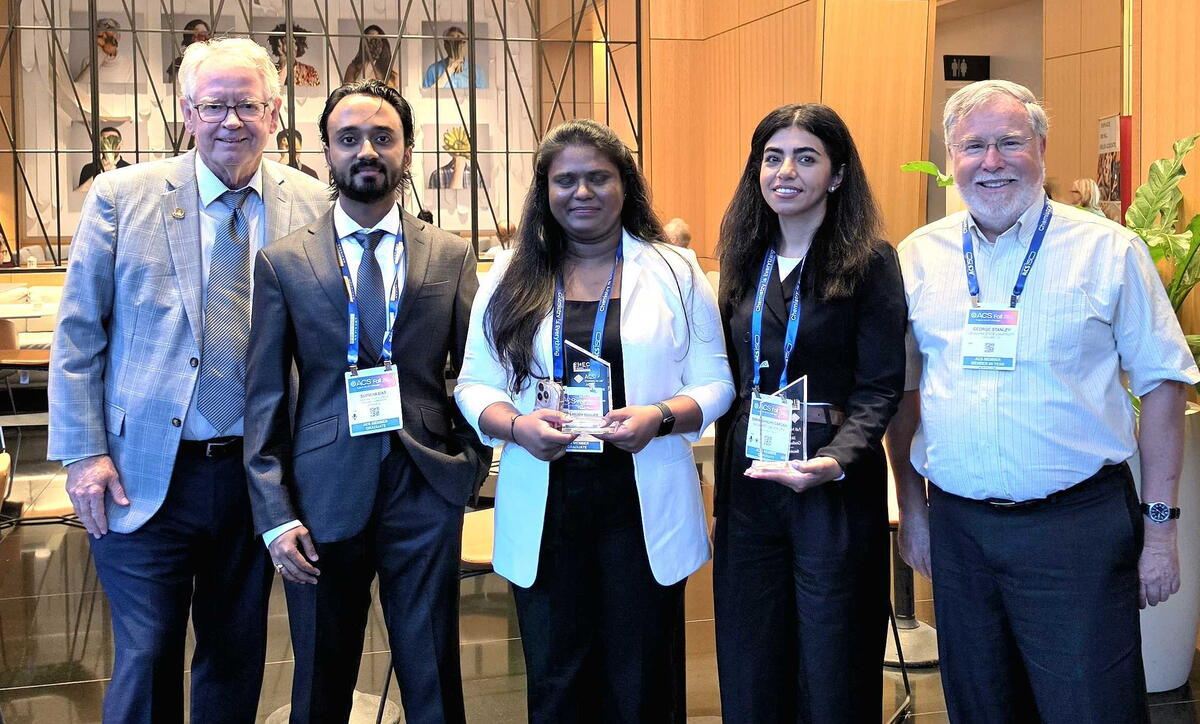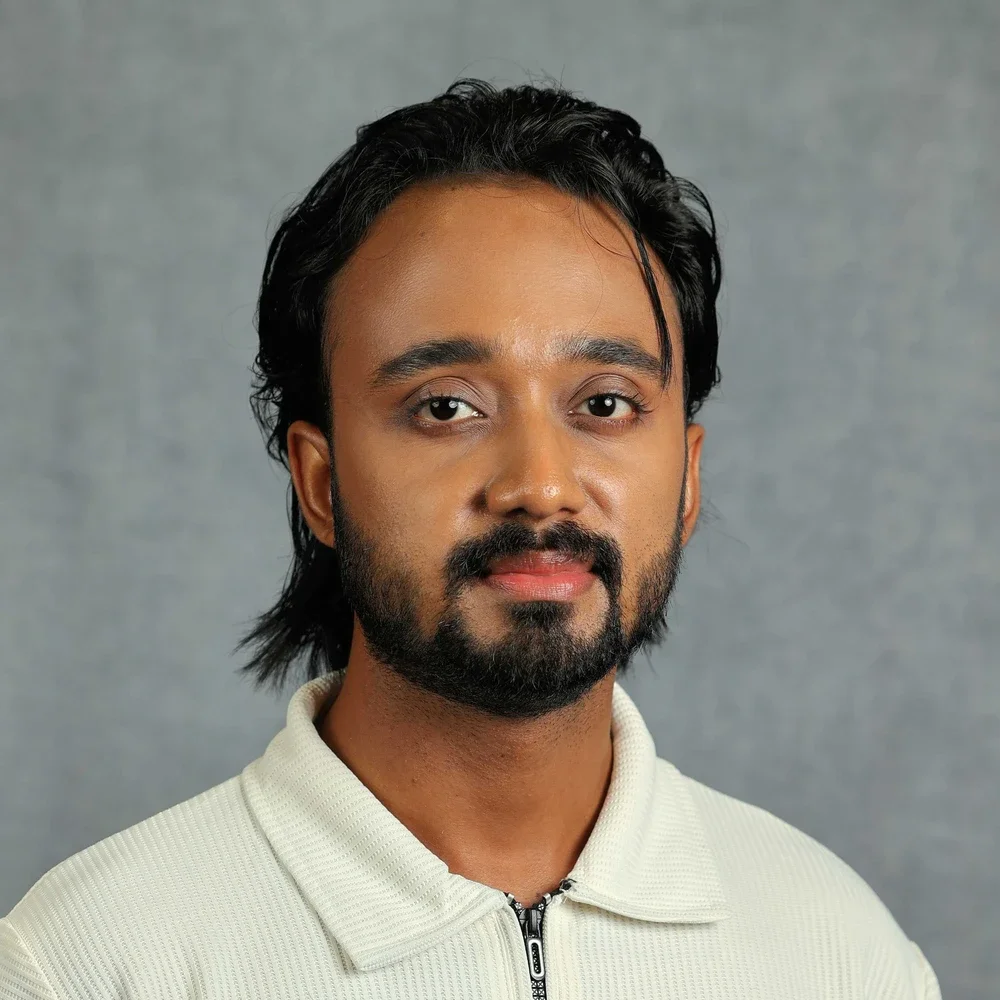
Graduate student Supriya (Riyo) Das won “First Place Paper” in a symposium hosted by the Industrial and Engineering Chemistry (I&EC) division of the American Chemical Society during the ACS Meeting in Chicago in August.
The award-winning presentation by Das focused on his research in the lab of chemistry professor Joaquín Rodríguez-López. Das said his presentation, "A Catalyst-Free Route for Bicarbonate and Carbonate Reduction via Sonicated Emulsive Water Microdroplets", focused on his research on catalyst-free carbonate/bicarbonate reduction work.
Das and Rodríguez-López found a way to transform a carbon source into valorized molecules such as formic acid without a catalyst, harsh chemicals, or energy-intensive steps involved in carbon capture. When CO₂ is absorbed — by an industrial scrubber or by the ocean — it stops being a gas and becomes dissolved bicarbonate and carbonate. Conventional technology must first boil, acidify, and compress that liquid to release CO₂ again before anything can be made from it.
The approach of Das and Rodríguez-López simplifies this process. Using sonicated emulsive water microdroplets — tiny droplets of water suspended in oil and agitated by ultrasound — they exploit the unusually reactive chemistry occurring at the droplet surface to perform redox reactions on bicarbonate and carbonate ions, directly transforming them into mM concentrations of formate, a valuable feedstock for fuels and chemicals. Notably, the reaction runs under atmospheric oxygen, at near-ambient temperature, and delivers yields well above comparable approaches within 30 minutes. This effectively transforms gases in the atmosphere into valuable chemicals.