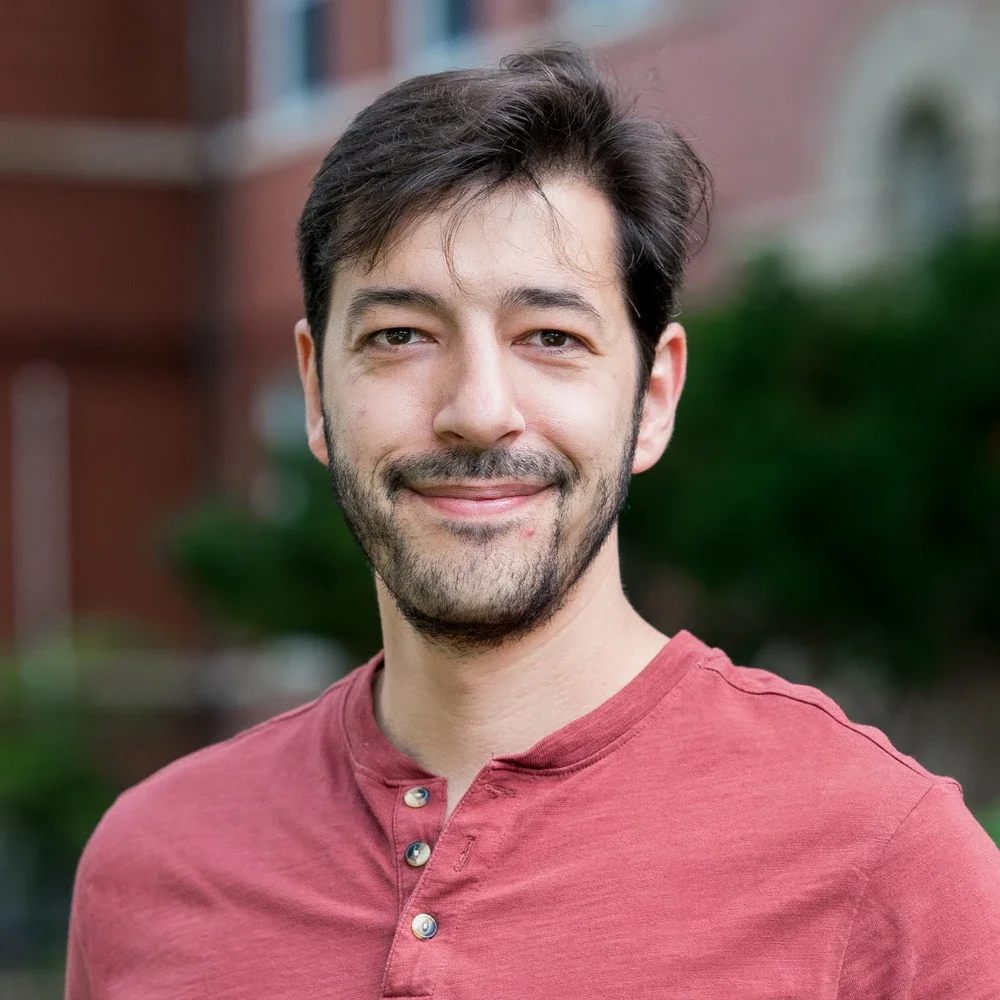
Looking to nature for inspiration, professor Majed S. Fataftah is exploring new ways to turn carbon waste, like carbon monoxide or carbon dioxide, into chemical building blocks that can be used to make valuable materials.
To pursue this research, Fataftah has received an American Chemical Society Petroleum Research Fund (ACS PRF) grant, announced in C&EN on June 22, 2026. The ACS Board of Directors recommended 113 new projects for spring 2026 funding, totaling over $12 million. The purpose of the ACS PRF grants is to provide seed money that allows researchers to pursue a new direction in petroleum-relevant science.
“Turning waste carbon into valuable chemical building blocks is one of catalysis's biggest open challenges, and today's industrial methods depend on costly precious metals and harsh conditions,” Fataftah explained. “This project takes inspiration from nature: enzymes like carbon monoxide dehydrogenase and acetyl-CoA synthase perform this exact chemistry effortlessly, using iron and sulfur.”
Building on that blueprint from nature, Fataftah said his research group will design synthetic iron-sulfur clusters that pair with earth-abundant metals to capture and stitch together carbon-based molecules, mimicking biology's elegant solution with a fully synthetic system.
“The work will uncover the fundamental design rules governing how these clusters activate small molecules and build new carbon-carbon bonds. Ultimately, this research aims to lay the groundwork for a new, more sustainable generation of catalysts for upgrading carbon feedstocks,” he said.
Fataftah joined the Illinois faculty in 2023 as an assistant professor of chemistry. The Fataftah lab is a physical inorganic chemistry group focused on harnessing synthetic chemistry to address challenging problems at the intersection of chemistry, physics, and materials science.