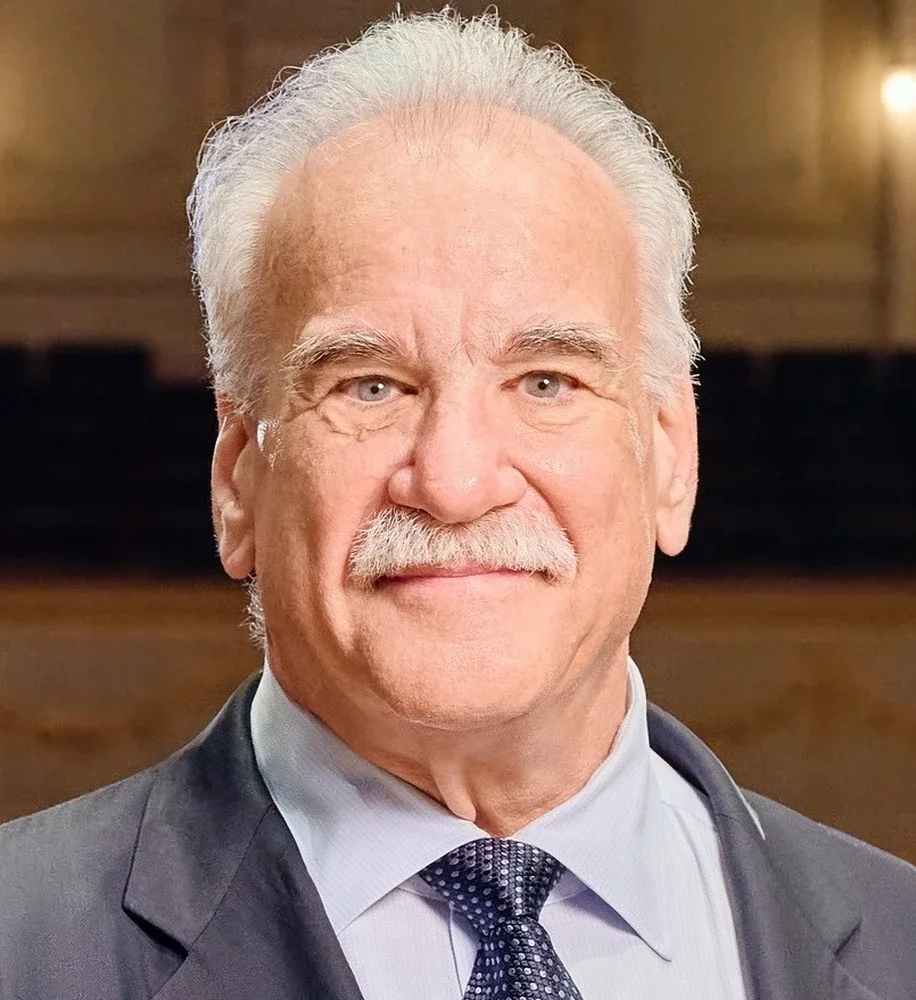
The 2026 Nobel Prize in Chemistry was awarded to Henri Kagan and Kenso Soai for their pioneering work on nonlinear effects and autocatalysis in asymmetric organic synthesis—the "Soai reaction". As the exact mechanisms of the Soai reaction have remained an enduring mystery, the Nobel Committee's official scientific background document summarizes efforts to better understand this reaction and explicitly notes that Scott Denmark, Reynold C. Fuson Professor of Chemistry, and his research group at the University of Illinois Urbana-Champaign proposed in a paper published in Nature Chemistry in 2020 a crucial, detailed mechanism involving the homochiral tetramer catalyst to solve these questions.
In the Nobel Prize committee's Scientific Background to the Nobel Prize in Chemistry 2026, Denmark's research is mentioned as part of a summary outlining the timeline leading up to scientists' current understanding of the reaction mechanism of the Soai reaction.
"Scott Denmark and colleagues proposed a detailed mechanism for the Soai reaction. Based on kinetic studies, including surrogate substrates, spectroscopic investigations of zinc alkoxides, and DFT calculations, they proposed a mechanism involving the Soai SMS complex in which the substrate coordinates to the homochiral tetramer catalyst through a floor-to-floor arrangement involving two coordinatively unsaturated zinc atoms. In this scenario, transfer of an alkyl moiety to the activated aldehyde then delivers the correct stereoisomeric product. Such floor-to-floor coordination of the substrate is, for geometrical reasons, disfavoured in the heterochiral tetramer, which was clearly indicated in the DFT calculation. This then accounts for the amplification of stereochemistry in the autocatalytic reaction and is in line with both the Kagan principle for asymmetric amplification and the Frank model for generation of homochirality.
Denmark's mention alongside this year's Nobel Prize follows a highly successful year for him, as he was recently awarded the prestigious 2026 Angewandte Chemie Chair and the 2027 ACS Roger Adams Award in Organic Chemistry.